
Craftsmanship
Six steps, and only one of them is fast.
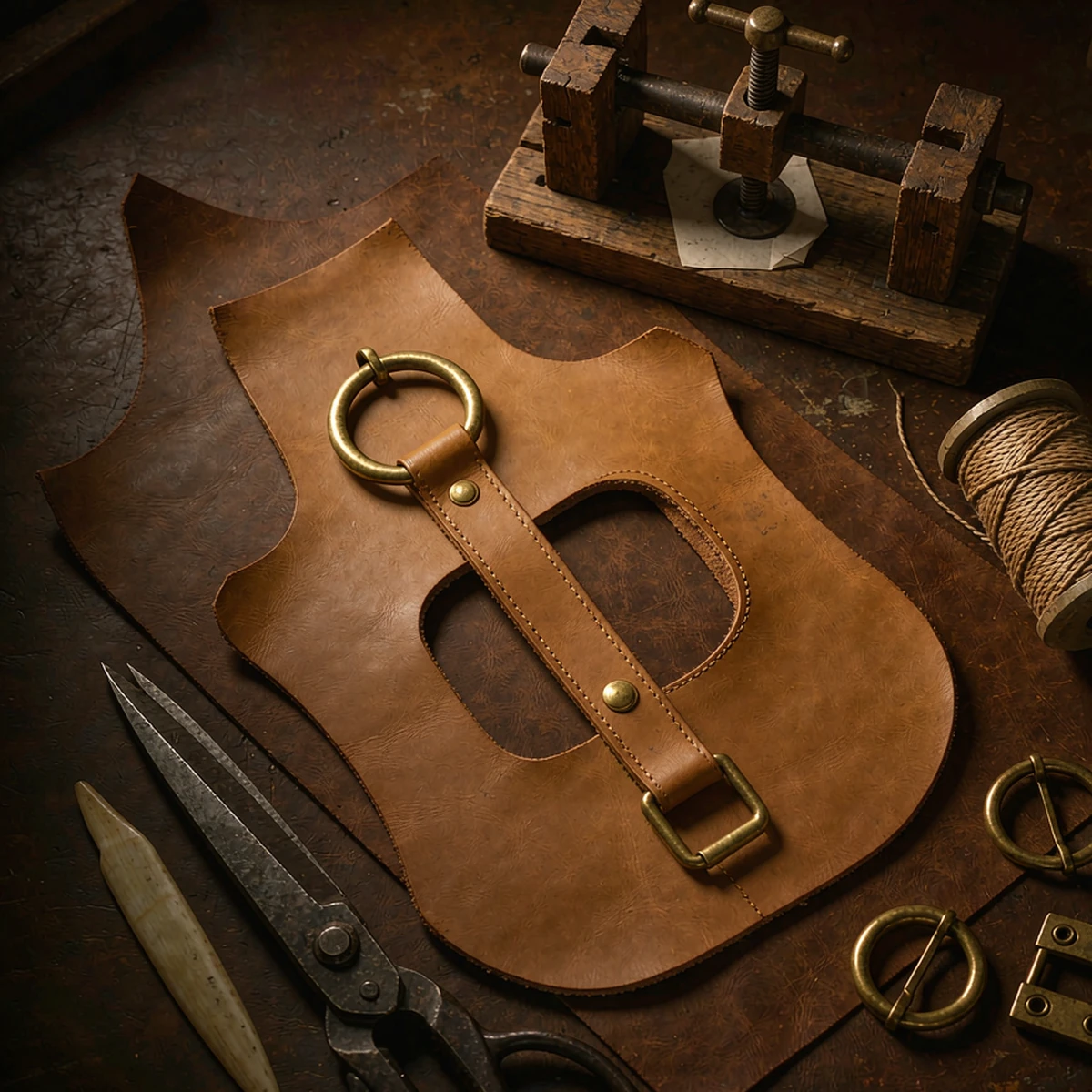
Every KEPAW piece goes through the same six steps. Nothing is skipped for a cheaper price point – the difference between a $119 crossbody and a $2,950 attaché is the hide, the hardware and the hours, not the method.
1. Selecting the hide
We buy full-grain and vegetable-tanned hides one at a time and reject anything with a repaired or corrected surface. Roughly a third of each hide is unusable, which is the honest cost of leather without a plastic topcoat.
2. Cutting around the marks
Every hide carries scars, veins and growth marks. We lay the pattern around them rather than sanding them out – which is why no two panels line up exactly the same way twice.
3. Skiving and folding
Edges are thinned by hand before they are folded, so a gusset stays 4 mm at the seam instead of 8 mm. Bulky edges are the single clearest sign of a bag made in a hurry.
4. Saddle stitching
Structural seams are saddle-stitched in waxed linen thread – two needles, one running stitch each. If a stitch ever breaks, the ones either side of it hold.
5. Burnishing the edges
Edges are painted, sanded and burnished in five passes, with wax rubbed in between. It is the slowest part of the build and the part that decides whether a bag looks new in five years.
6. Inspection and packing
Hardware is load-tested, zips are cycled, every stitch is inspected against a light box, and the piece is photographed before it is wrapped in its dust bag.
Care
Looking after full-grain leather
Full-grain leather needs very little, and most of what it needs you already have.
- Keep it dry. If it gets wet, blot it and let it dry away from direct heat. Never use a radiator or a hairdryer – heat is what cracks leather.
- Feed it once or twice a year. A neutral cream conditioner, worked in with a cloth, keeps vegetable-tanned hides supple.
- Expect it to change. Water marks, a darkening tone and a softened shape are normal. They are the reason people buy leather instead of nylon.
- Store it stuffed. Keep the shape with the dust bag while it is not in use, rather than hanging it by a strap.
- Do not over-clean it. Saddle soap only when it is genuinely dirty. Every cleaning takes a little of the finish with it.
Questions about a specific piece?
Tell us which bag you are looking at and how you plan to use it – we will tell you honestly whether it is the right one, including when it is not.